Nature
Renowned for its rocks, often wild in both formation and colour, Brittany has very distinctive looks. While the seascapes tend to the dramatic, the landscapes inland are often gentle. The mild climate allows all manner of plants to thrive. The Breton carthorse may have retired from the fields, but it and other traditional animals are given space in special centres. Underwater, there’s a whole other Breton world to discover of course!
-
Geology
Breton ancient rocks come in surprising colours, most sensationally on the Côte de Granit Rose (the Pink Granite Coast) and Côte d’Emeraude in the north, in the Crozon Peninsula cliffs out west, and on the island of Groix to the south. Granite is the stone most associated with the region, but other rock formations colour the picture, such as sandstone, schist and quartz.
-
Landscapes
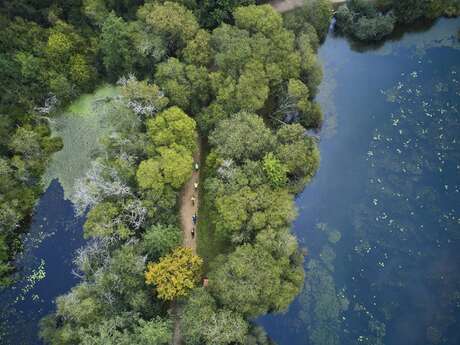
A patchwork of fields covers large swathes of Brittany, stretching down to its sandy coastal edges, which are so marked by sensational headlands and bays. Twisting rivers break up the agricultural landscapes inland. Their valleys are wooded; indeed much of central Brittany used to be heavily forested – just patches remain. Mellow lines of hills and heath cross the region east to west.
-
Flora and fauna
Obélix found boar under every Breton bush and they still wander freely, even if wolves don’t. On the farm, the carthorse was the most important animal, until replaced by the tractor while bird watchers are in for a treat on the coast. Spot marine creatures in the sea, but also in Brittany’s many aquaria and as for Breton flora, it can prove surprisingly exotic, on land and underwater.
-
Canals and rivers
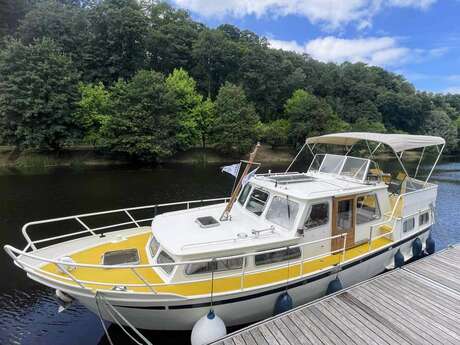
The Odet, Finistériens claim, is the prettiest river in France. It is certainly typical of many a merry, boulder-strewn Breton waterway, with enchanting wooded banks and the grounds of fine houses sloping elegantly down to the water’s edge. A couple of major canals were created for commerce in the 19th century; they’re now exploited for tourism. Lakes are dotted around the region.
-
Natural parks
Brittany’s three natural parks all have close connections with water. The Parc d’Armorique extends across central Finistère, from the Monts d’Arrée, via the Aulne estuary and Crozon Peninsula, to the Molène archipelago. Here, the Parc Marin d’Iroise was the first marine park created off French shores. As to the Brière, down towards the Loire, it’s the second largest marsh in France.
-
Nature reserves
Around Brittany, national and regional nature reserves have been set up to protect sensitive or endangered environments and many defend special bird habitats. In recent decades, a national body, the Conservatoire du Littoral, has been buying up beautiful stretches of the shoreline to preserve them. As for Brittany’s bays, they’re an exceptional natural wonder.