©

Crtb Ae05918 Gregory Mignard Captain Yvon Hom Project

|

Grégory Mignard

Bouchot mussels


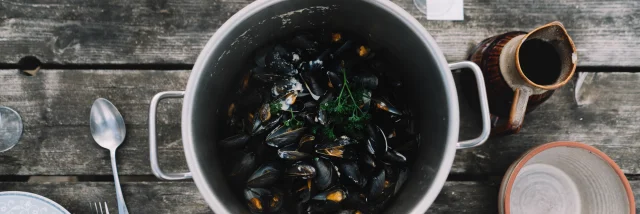
Enjoying mussels and chips while you admire the sea: that THE summertime pleasure in Brittany at mealtimes! This holiday dish par excellence can be adapted to all appetites. Children love it because they can eat it with their fingers. A guilty pleasure for a companionable time with your family or among friends!

How do you recognise bouchot mussels?

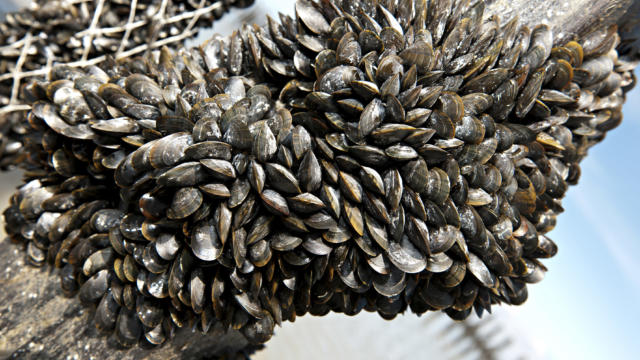
These little molluscs are recognisable by their bluish black shells and  orangey yellow flesh. Low in calories and rich in iodine, mussels make an ideal dish if you want to fill up on proteins, calcium and iron. There are differences between bouchot mussels, wild mussels, longline mussels, dredged mussels and open-sea mussels. Brittany is famous for “the bouchots”, which have an inimitable flavour and acknowledged quality.

Where are they produced?

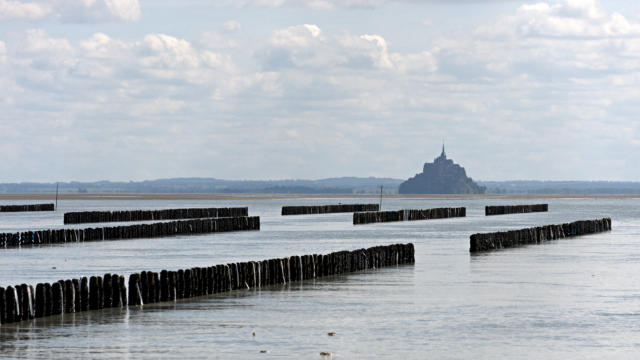
In Brittany, most bouchot mussel production areas are located in the Breton part of Mont-Saint-Michel BaySaint-Brieuc Bay, the Roadstead of Brest and in the Vilaine estuary around Pénestin.

When can you eat them?

The mussel-eating season stretches from July to January. Mussel farming, known as mytiliculture, makes Brittany the second producing region behind Normandy.

How are they farmed?

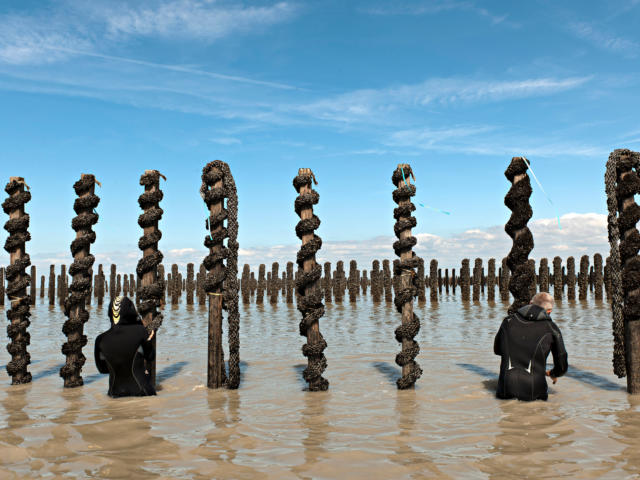
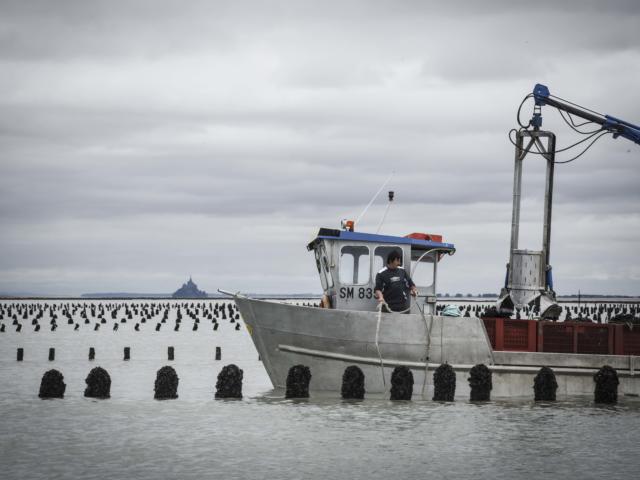
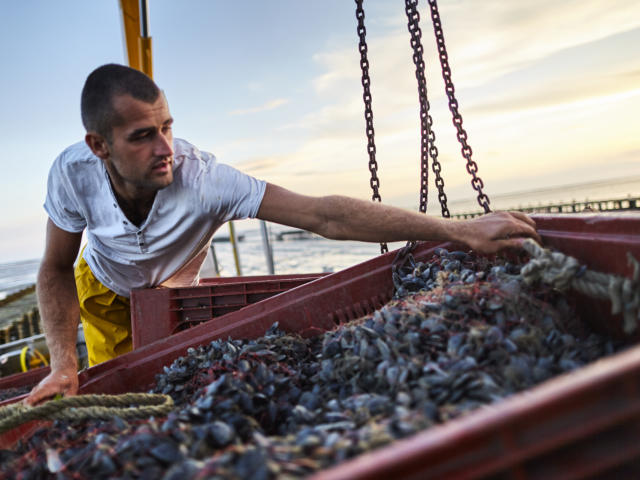
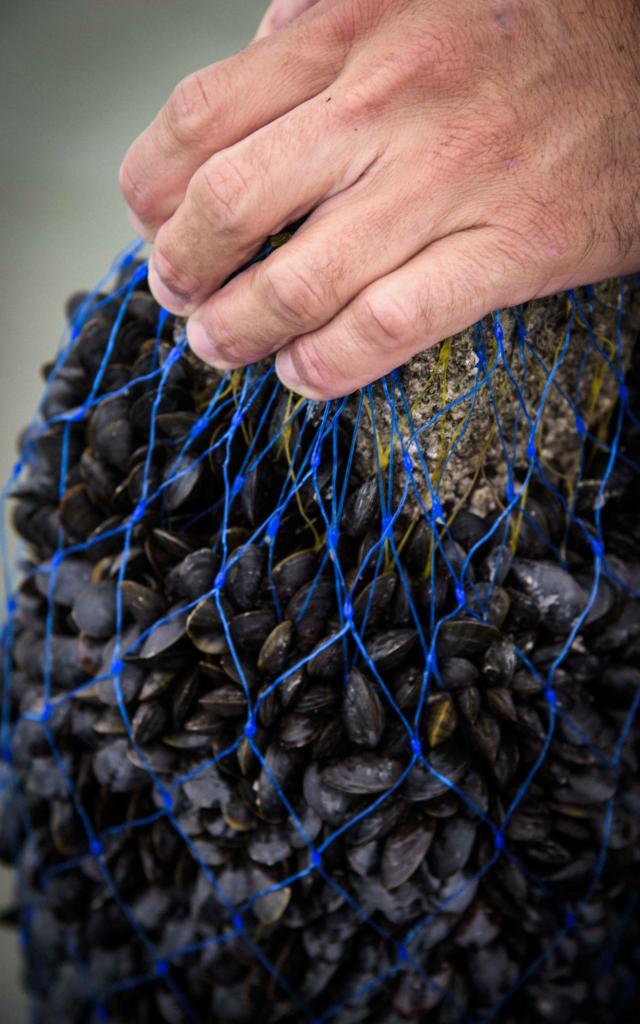
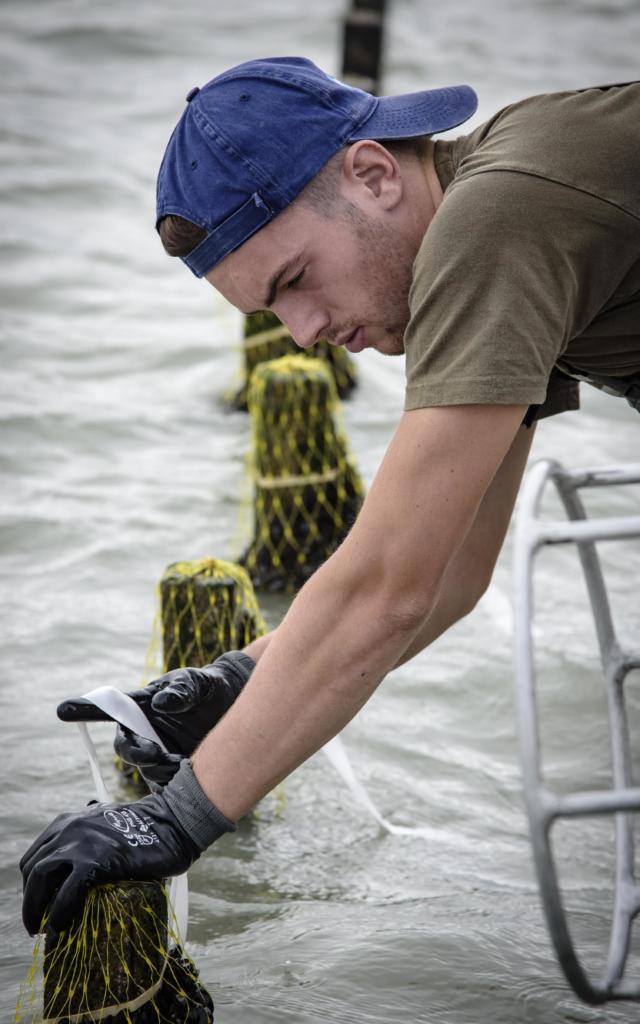
Mussel farmers collect mussel spats (larvae) naturally  on biodegradable natural fibre ropes. These are then wrapped around wooden stakes, also called bouchots. Each bouchot can carry up to 80 kg of mussels. Bouchot mussels’ shells are at least 12 mm thick and are a maximum of 8 cm long.


Did you know?

How did bouchot mussels originate?

We owe this farming method to the Irishman Patrick Walton: in 1235, he noticed that mussels were spontaneously attaching themselves to the stakes he had planted in the seafloor in the vain hope of catching seabirds. When racks were placed between them, the stakes formed a wooden fence that he named “bout” and “choat”. Bouchots derive their name from his invention.

Click. Inspire. Go…

Receive the Brittany newsletter!

To receive 4 times a year a summary of the best things to do in Brittany by e-mail head this way.

Where can I enjoy them on producers’ sites?

Mont Saint-Michel Bay bouchot mussels

This is the only Appellation d’Origine Protégée (AOP – Protected Designation of Origin) for seafood to be obtained since 2011. Production is spread over 248 kilometres in Mont-Saint-Michel Bay, carried out by some forty oyster farmers. You can recognise these mussels on market stalls by the AOP logo and their health label.

Visits and tastings

  • At the Maison de la Baie in Vivier-sur-Mer, you can visit bouchot mussel production sites. Aboard the “mytili-mobile”, you’ll acquaint yourself with all the secrets behind farming Mont Saint-Michel Bay bouchot mussels AOP and mussel farmers’ work.
  • La Dégustation Tonneau in Vivier-sur-Mer is the ideal place for sampling Mont Saint-Michel Bay bouchot mussels AOP and Cancale oysters, while admiring the bay.
  • Moules Morisseau®, from one of Mont Saint-Michel Bay’s top mussel producers for over 20 years, are popular with foodies and top chefs alike.

Pénestin bouchot mussels

La Pénestin” has Label Rouge certification, a guarantee of its producers’ traditional knowhow. These bouchot mussels from southern Brittany are farmed by some thirty producers around the Vilaine estuary. Pénestin has become a Site Remarquable du Goût (SRG – Outstanding Taste Site) thanks to these bouchot mussels and its Confrérie des Bouchoteurs.

Visits and tastings: 

  • Housed in Tréhiguier port’s old lighthouse, the Maison de la Mytiliculture will reveal everything you need to know about mussel farming in the Vilaine estuary.
  • The Breizh Coquillages shellfish farm organises discovery workshops and commentated tastings.

Pénestin bouchot mussels were included in the Intangible Cultural Heritage of France inventory on 15 October 2020.

Bouchot mussels from the Roadstead of Brest

In Plougastel-Daoulas, Nicolas Le Moal has been the only mussel farmer since 2006 to produce Moules de Bouchot de l’Iroise® mussels, with over 20,000 stakes in the Roadstead of Brest. His products are marketed by Keraliou. They’re recognisable by their taste and size and are eaten from August to December.

Bouchot mussels from Saint-Brieuc Bay

A score of mussel farmers operate on almost 200,000 bouchots planted in Saint-Brieuc Bay, facing the Hillion peninsula.

Visits and tastings:

  • If you’re ever in Hillion, pay a visit to the mussel farm run by Jean-Marie Hurtaud, who’ll tell you all about the mussel’s journey from bouchot to plate.
  • On the Jospinet slipway, uncover the secrets of Saint-Brieuc Bay and its bouchots at Le Panier Iodée in total immersion on the producer’s site. A shop and a tasting area invite you to enjoy mussels along with shellfish and crustaceans in situ.
  • In the Bon Abri mussel farming area in Hillion, the Cabane de Mytilus serves mussels and chips every day in the summer, at lunchtime and in the evening, direct from Saint-Brieuc Bay. And the Myti’bus will carry you off on a two-hour exploration of the bay’s mussel-farming activity.
  • Bicoque, in Planguenoual, a stone’s throw from Jospinet, is a summer canteen with the Desbois family’s mussels on its specials board, sautéed à la plancha.

How do you prepare them?

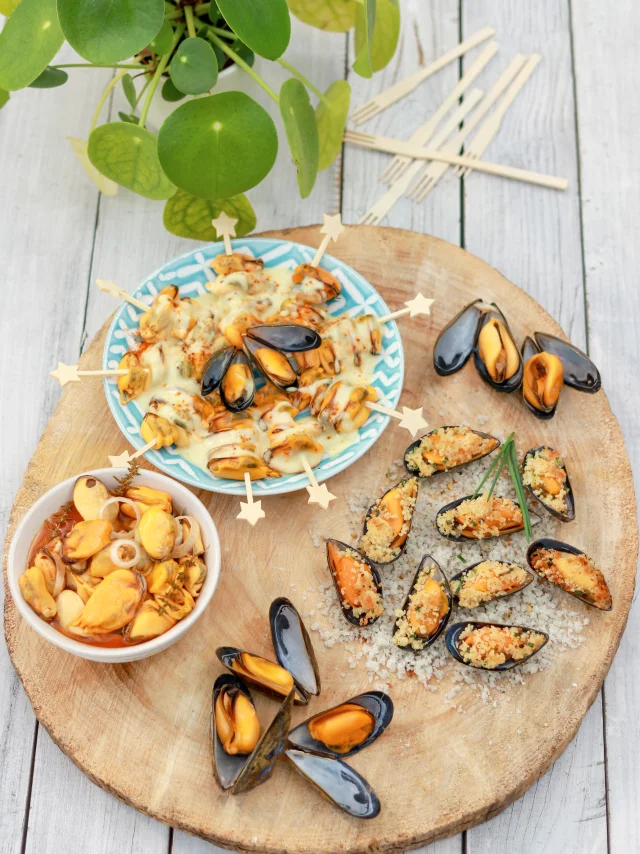
In white wine sauce, à la plancha, stuffed, cold, in escabeche sauce – to each their own when it comes to enjoying the summer’s star turns. Allow about 500 grams per person as a main course. When you’re buying them, ensure their shells are fully closed or respond to finger pressure. You’ll need to clean them in order to remove the byssus (a fibre that enables mussels to attach themselves to rocks) and any small shellfish that have decided to take up residence on their shells. They can also be purchased already “debearded”, in which case they’re known as Ready-to-Cook (PAC) mussels. You then throw them into a saucepan over high heat, along with an onion, some parsley and white wine for the “marinière” version. The mussels open within 5 minutes and all you need do now is eat them with your fingers or by serving yourself on one of their shells!

Tip

So as to make sure they’re fresh, immerse them in water for 10 minutes. You mustn’t eat any that rise to the surface. 

How long do they keep?

Raw mussels keep in the fridge for48 hours. If they’ve already been cooked, they can serve as tapas the following day.

Where can I eat bouchot mussels in Brittany?

  • Le Petit Bouchot in Fréhel is a restaurant bistro serving dishes made from fresh local produce. During the season, mussels are its flagship dish! The added bonus: mussels with Roquefort and a sun-drenched terrace a stone’s throw from Cap Fréhel!
  • Le Café de l’Ouest in Saint-Malo with its marine brasserie-style decoration right in the city centre, its uniformed waiters (red braces mandatory!) and its always fresh top-quality products. Its pluses: such delicate touches as a fish rillette served the moment you’re seated, hats lent to customers who want to avoid the sunlight, and meticulously chosen quality products (including Bordier butter).
  • La Marinière: the only restaurant on Boulevard de la Mer in Saint-Cast-le-Guildo, facing the beach, with a heated covered terrace and stylish decoration. The owner, David, makes it a point of honour to work with local producers.
  • Not to be missed out on in Brest, Le Tour du Monde in Moulin Blanc Marina serves Moules Bouchot de l’Iroise® mussels in a relaxed atmosphere, on its panoramic terrace overlooking the marina.

Vielleicht gefällt Ihnen auch